
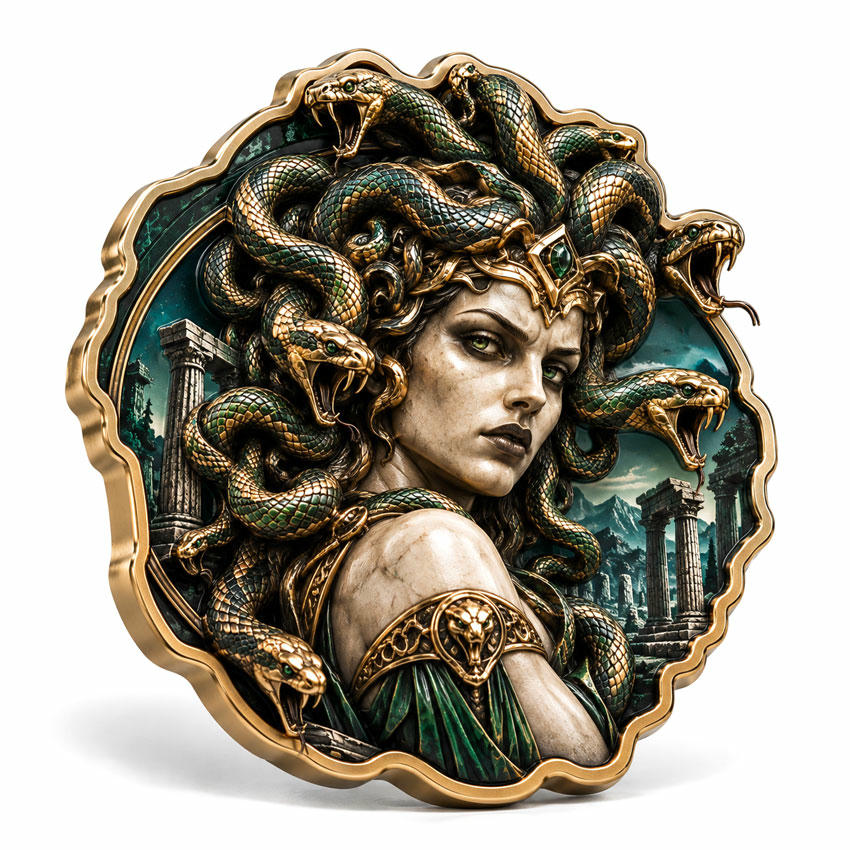
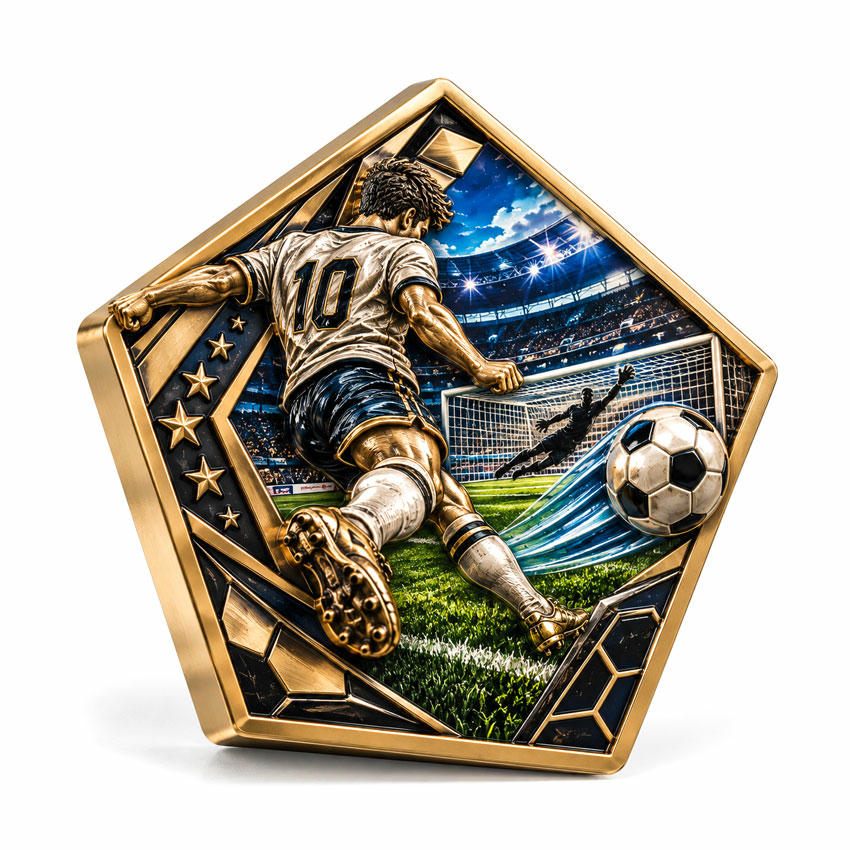
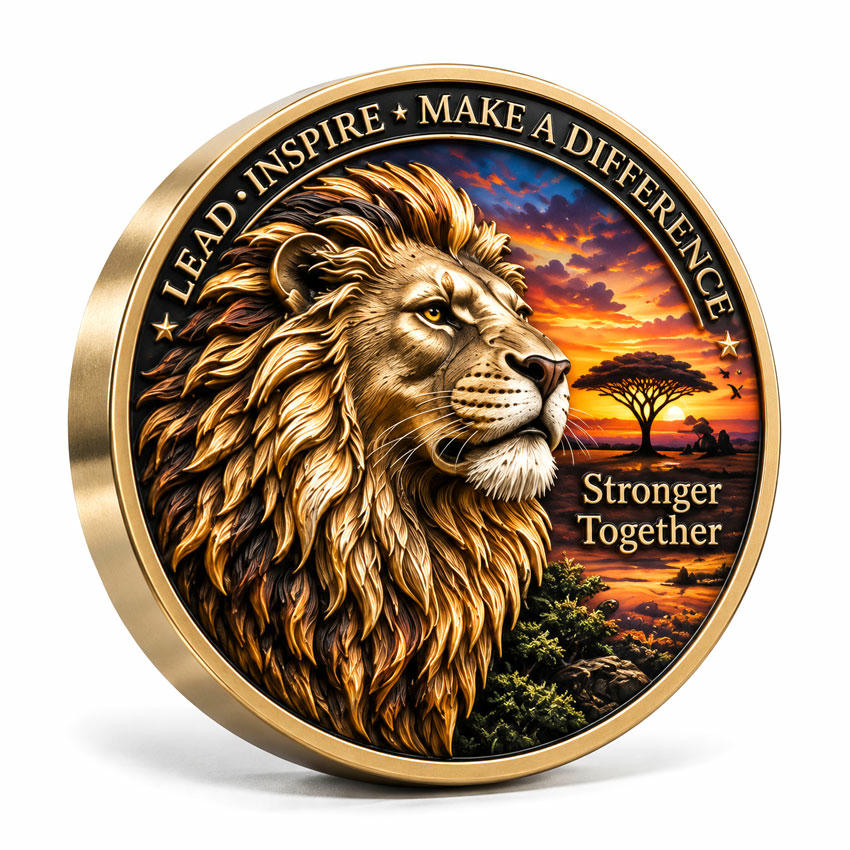
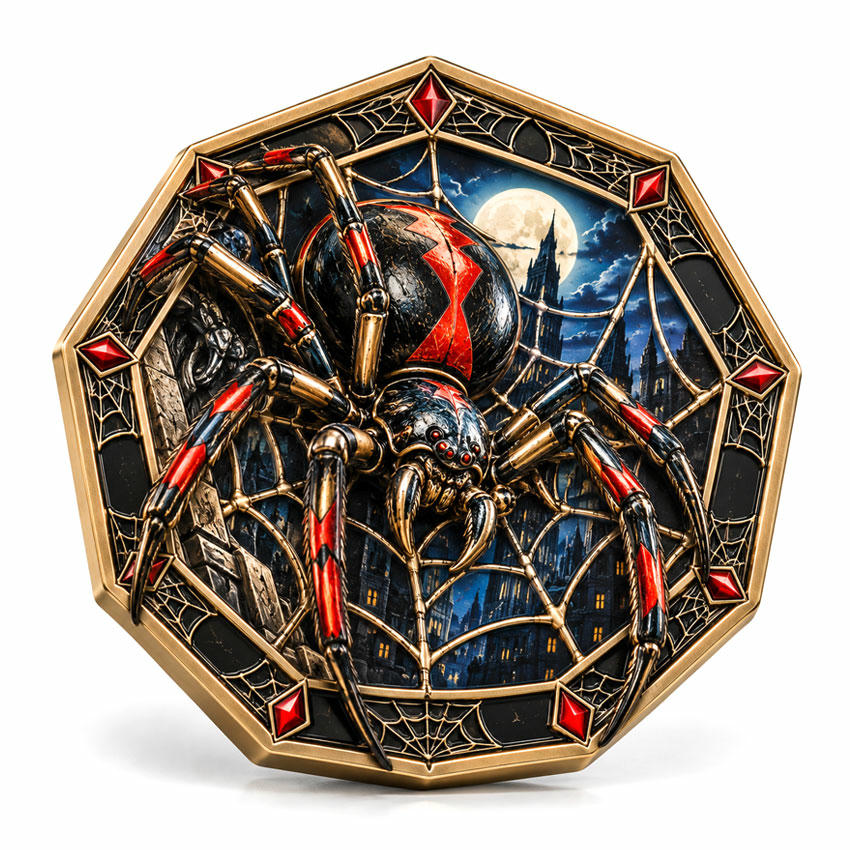

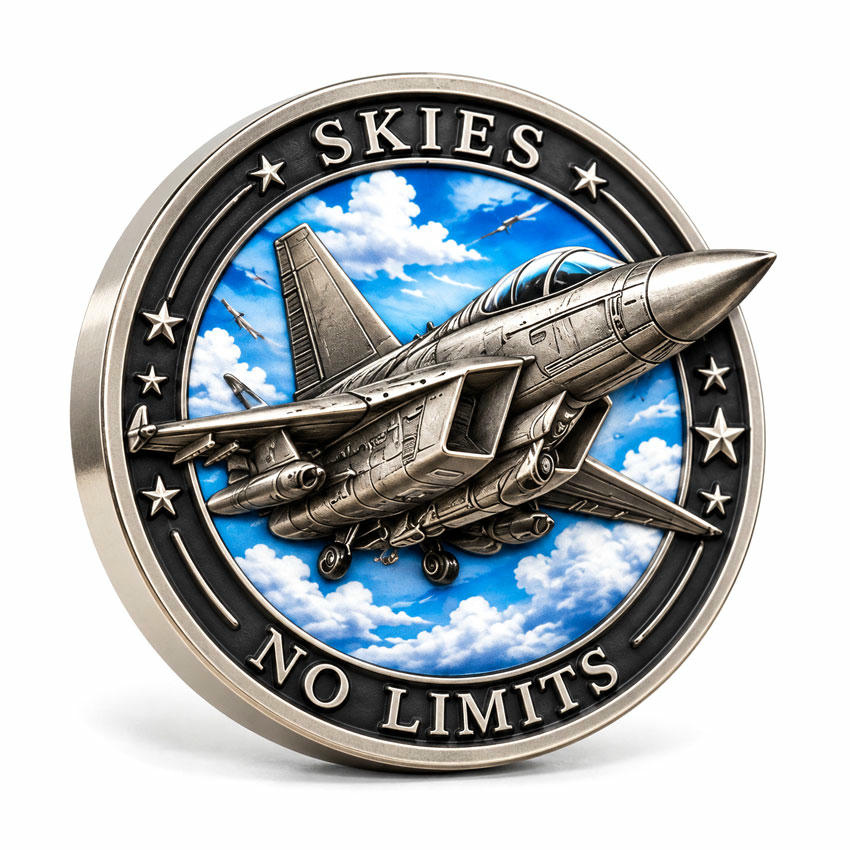
Custom UV Printed 3D Challenge Coins
Custom 3D zinc alloy challenge coins with full-color UV printing, deep relief and detailed multicolor artwork.
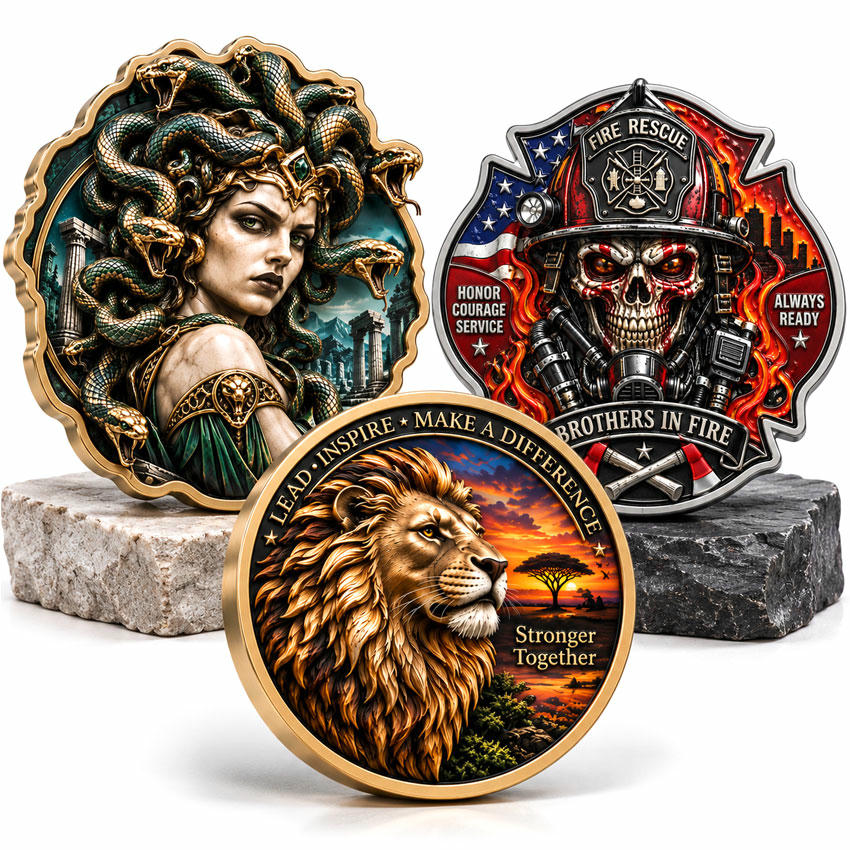
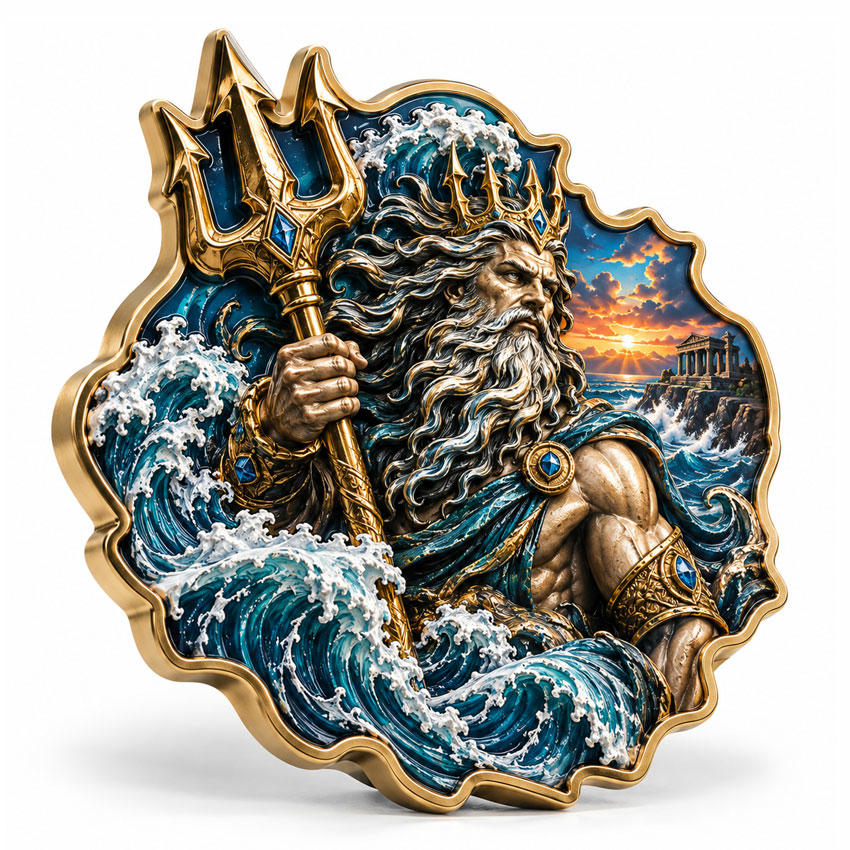
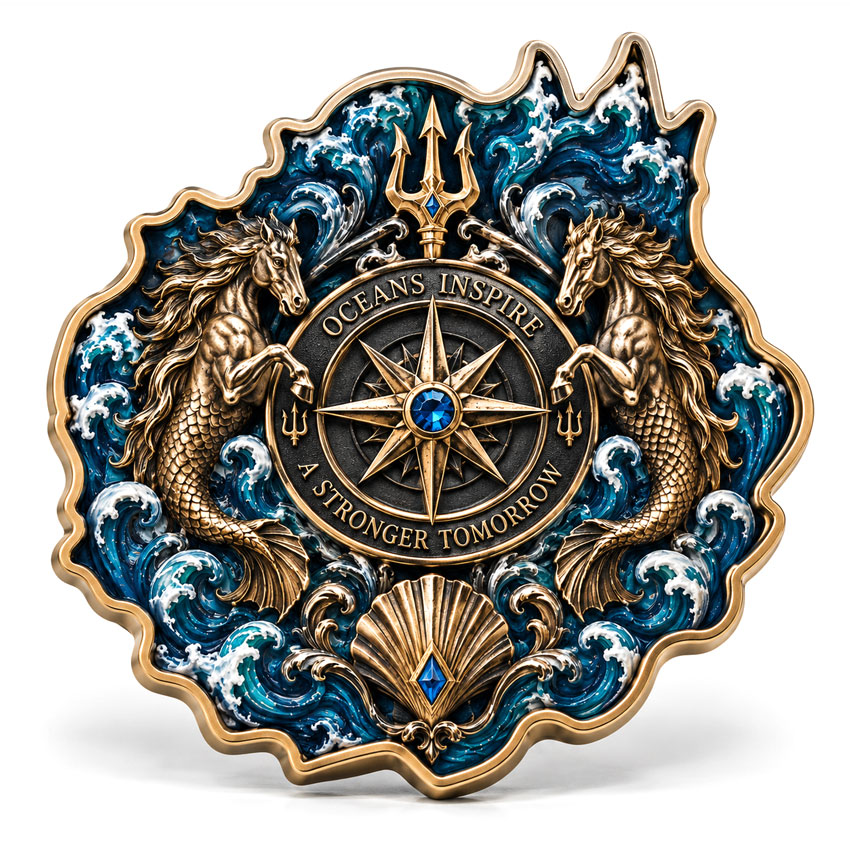
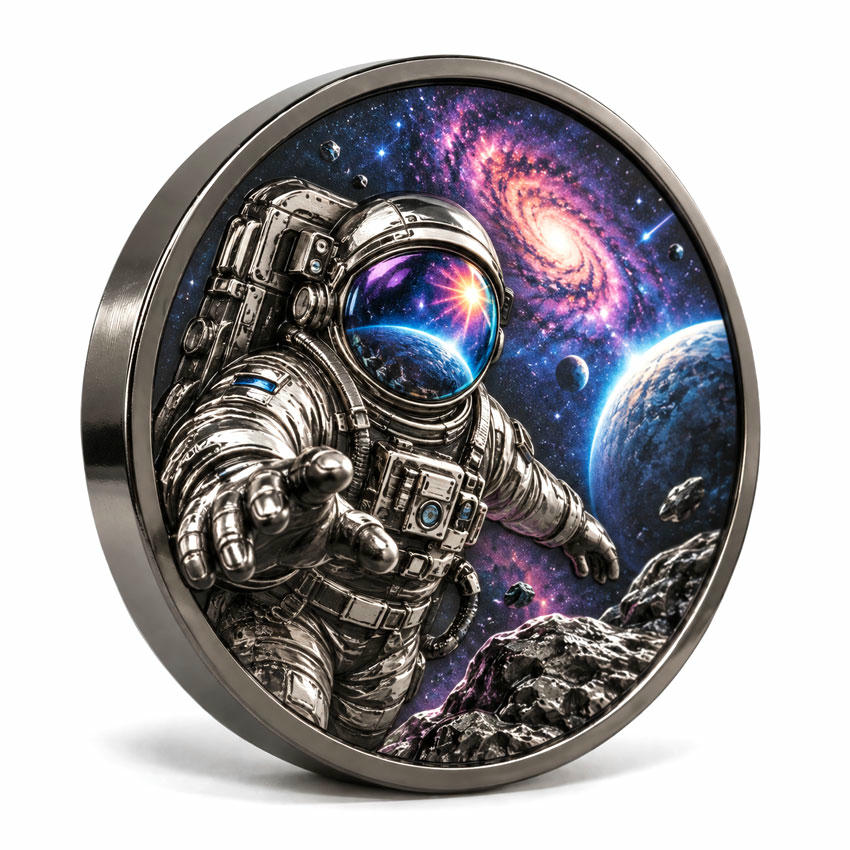
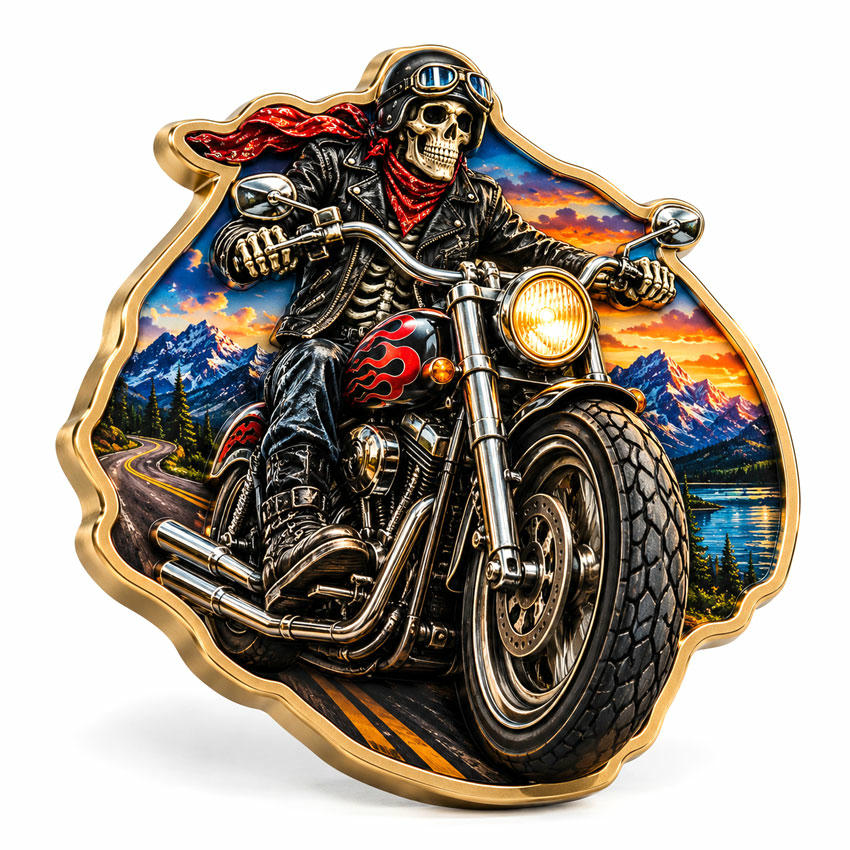
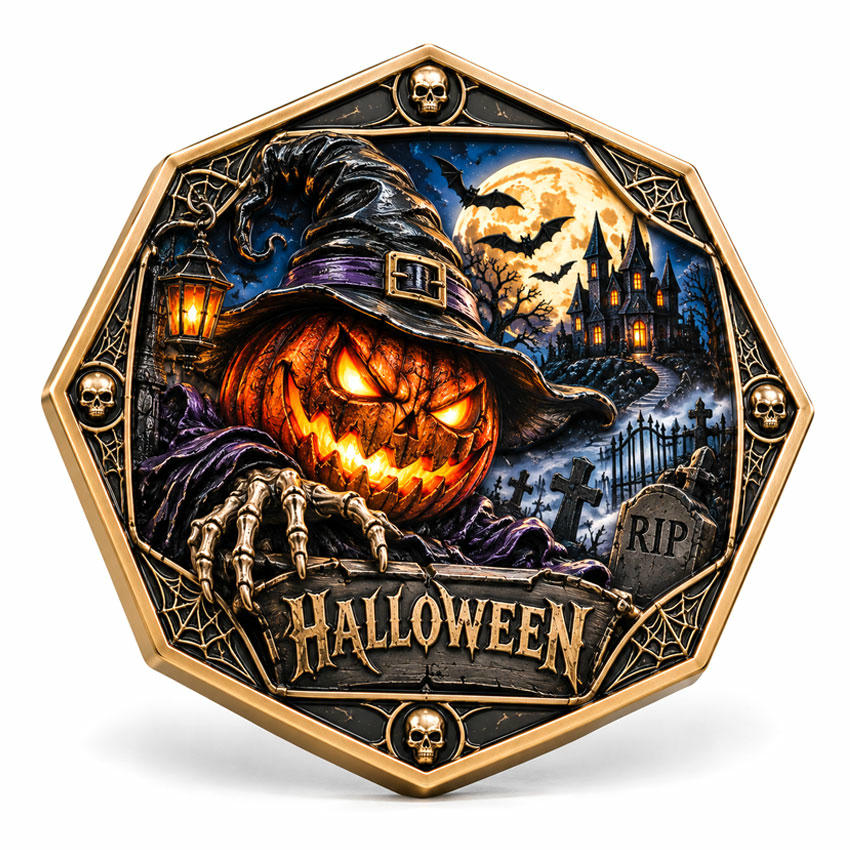
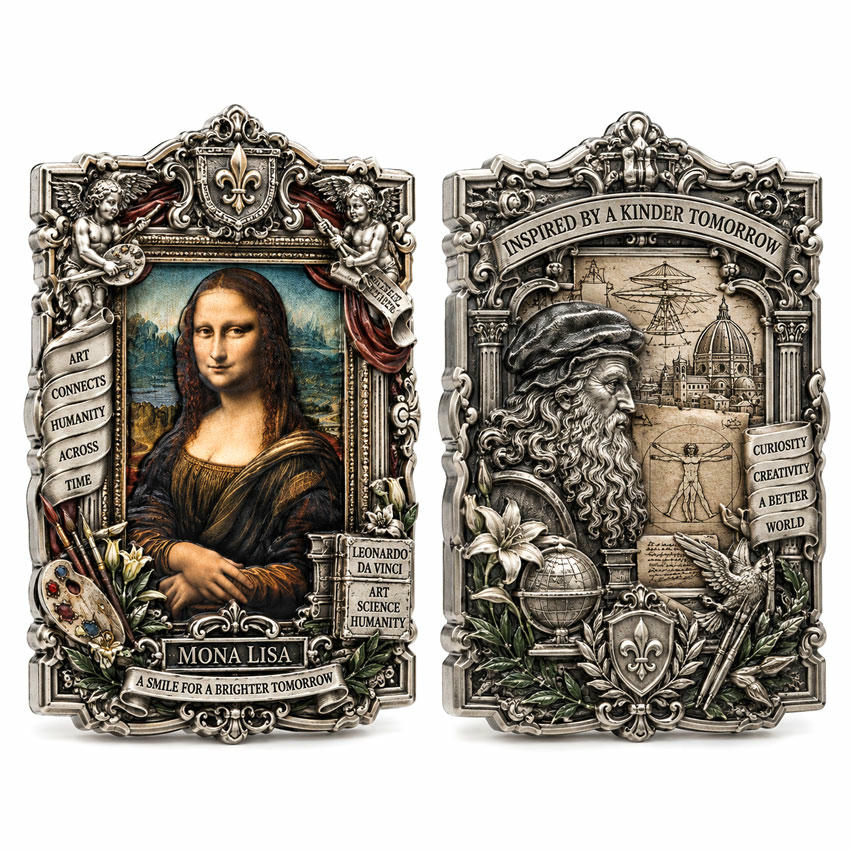
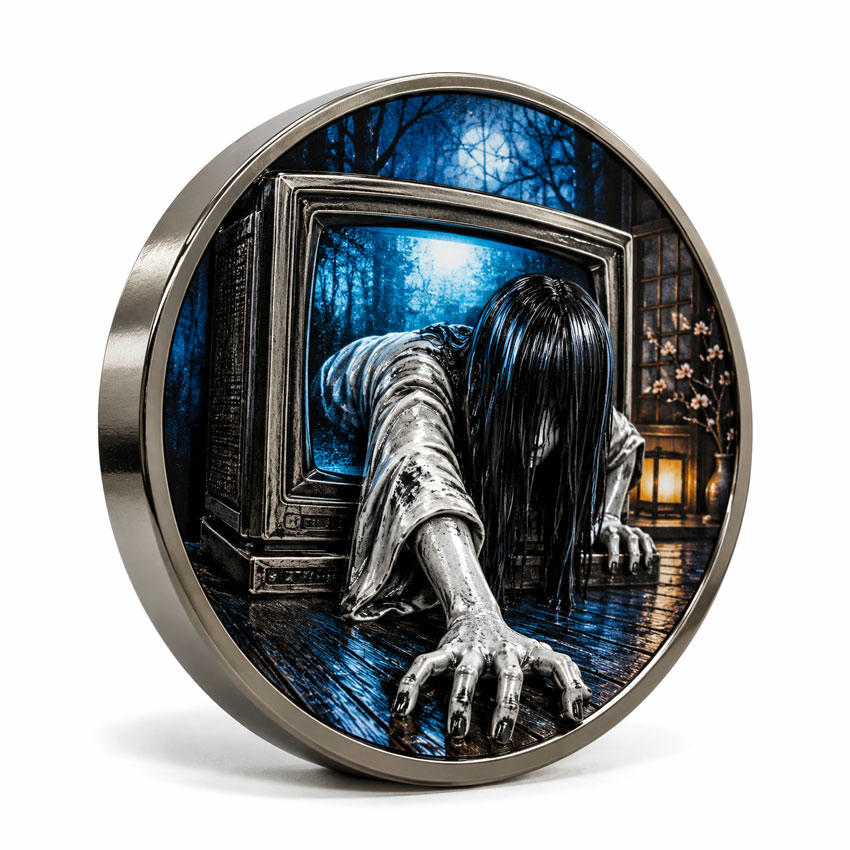
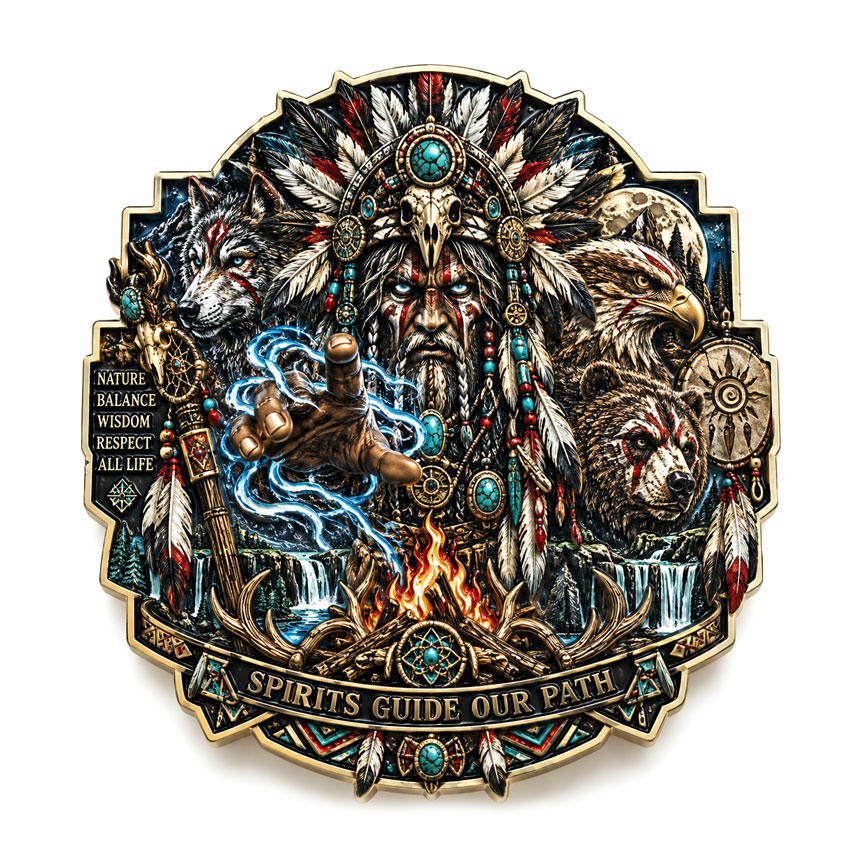
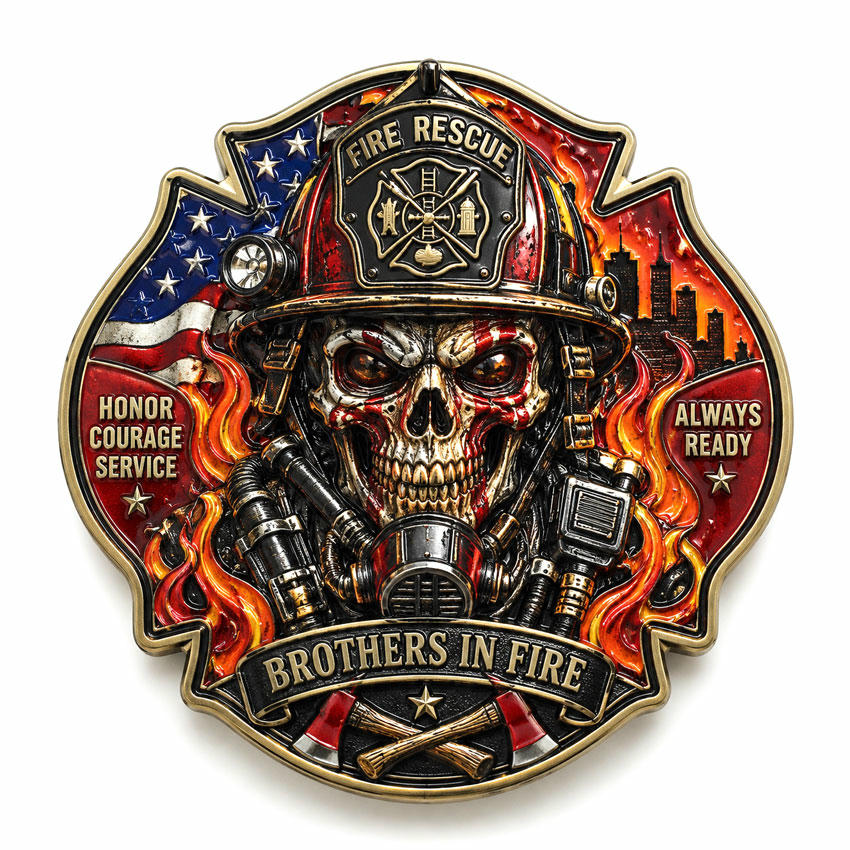
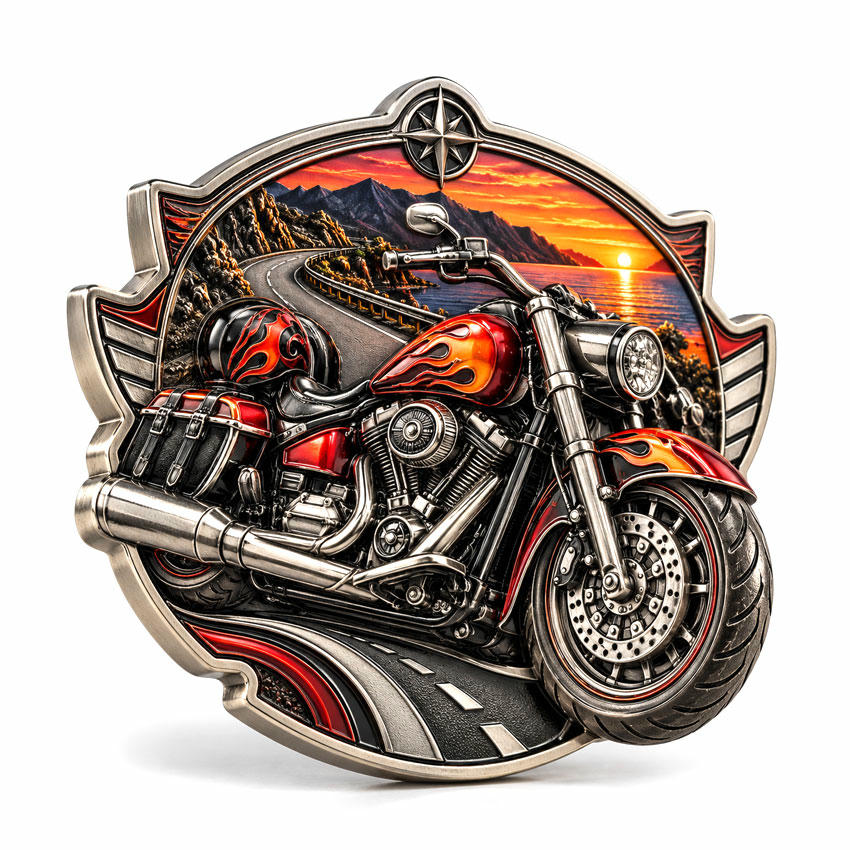
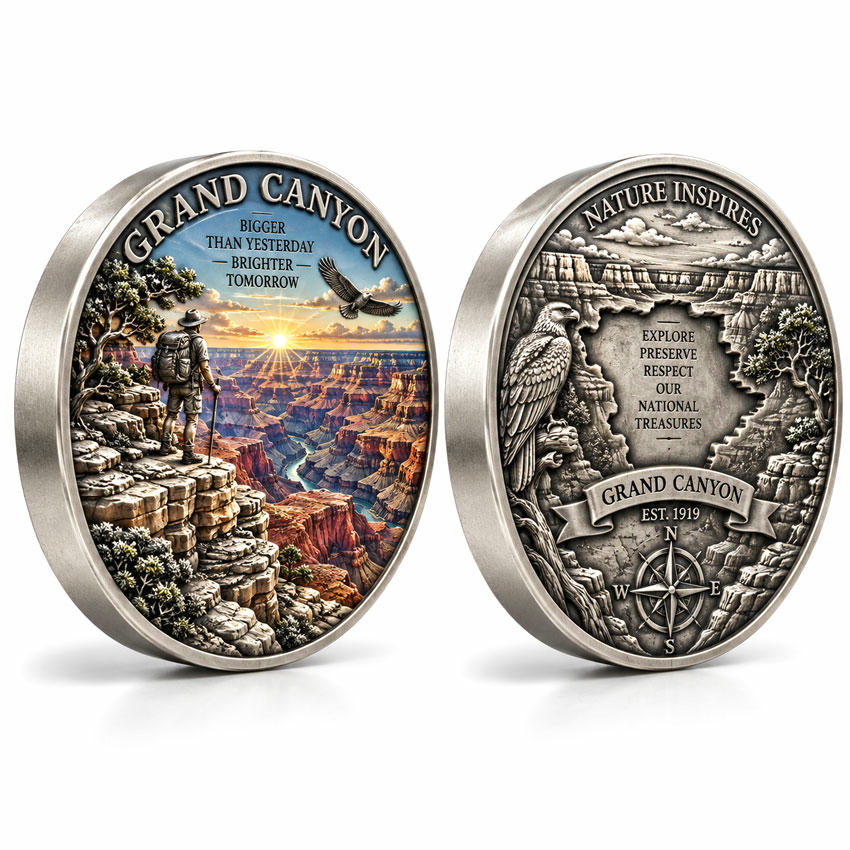
Custom UV printed 3D challenge coins combine sculpted zinc alloy relief with full-color digital printing, allowing physical depth, gradients, fine textures and complex multicolor graphics to work together in one design.
This process is especially suitable for artwork such as characters, animals, landmarks, vehicles and collectible designs where both strong 3D form and detailed color reproduction are important.
The best results come from planning the relief height, printed areas and exposed metal finishes together during artwork development, rather than treating UV printing as a separate decoration added after the 3D structure is completed.
DETAILS
Designing Deeper 3D Relief for Zinc Alloy Challenge Coins
Zinc alloy challenge coins can be produced from approximately 1.5 mm up to 10 mm in overall thickness, depending on the design and structure. However, overall thickness alone does not determine how three-dimensional the finished coin will appear.
For designs requiring more pronounced relief, both the edge thickness and the maximum thickness at the highest sculpted point should be defined during artwork development.
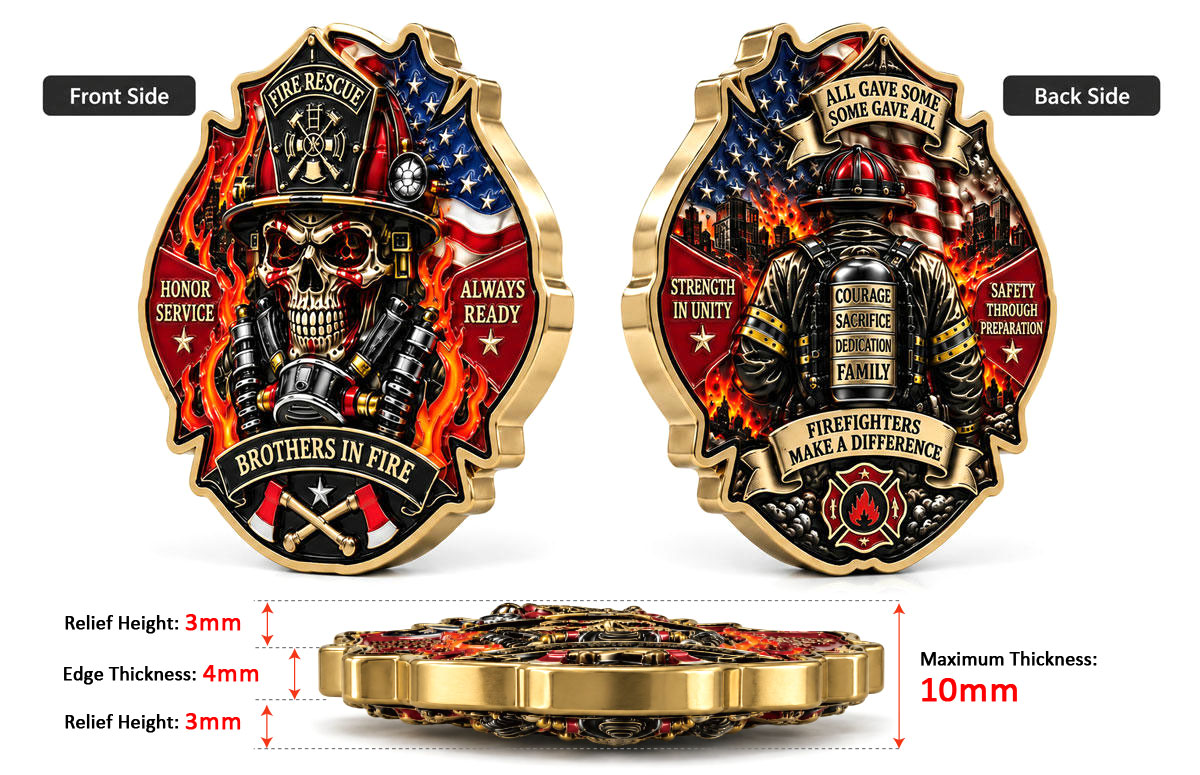
Double-Sided 3D Relief Challenge Coins
3D relief can be die-cast on both sides as one integrated zinc alloy coin body.
Example
- Edge Thickness: 4mm
- Maximum Thickness: 10mm
Minimum thickness can be as low as approximately 1.5 mm, depending on the design and structure.
Design Tip
A greater height difference allows deeper contours and more pronounced 3D relief.
How UV Printing Works on 3D Challenge Coins
UV printing adds full-color graphics directly to finished 3D zinc alloy challenge coins while retaining the underlying metal relief.
Unlike traditional enamel filling, UV printing can reproduce gradients, fine textures, small details and complex multicolor graphics without requiring metal borders between every color area.
UV printing can be applied to suitable flat or gently contoured surfaces, with or without a white ink base depending on the desired color opacity and metallic effect.
With or Without a White Ink Base?
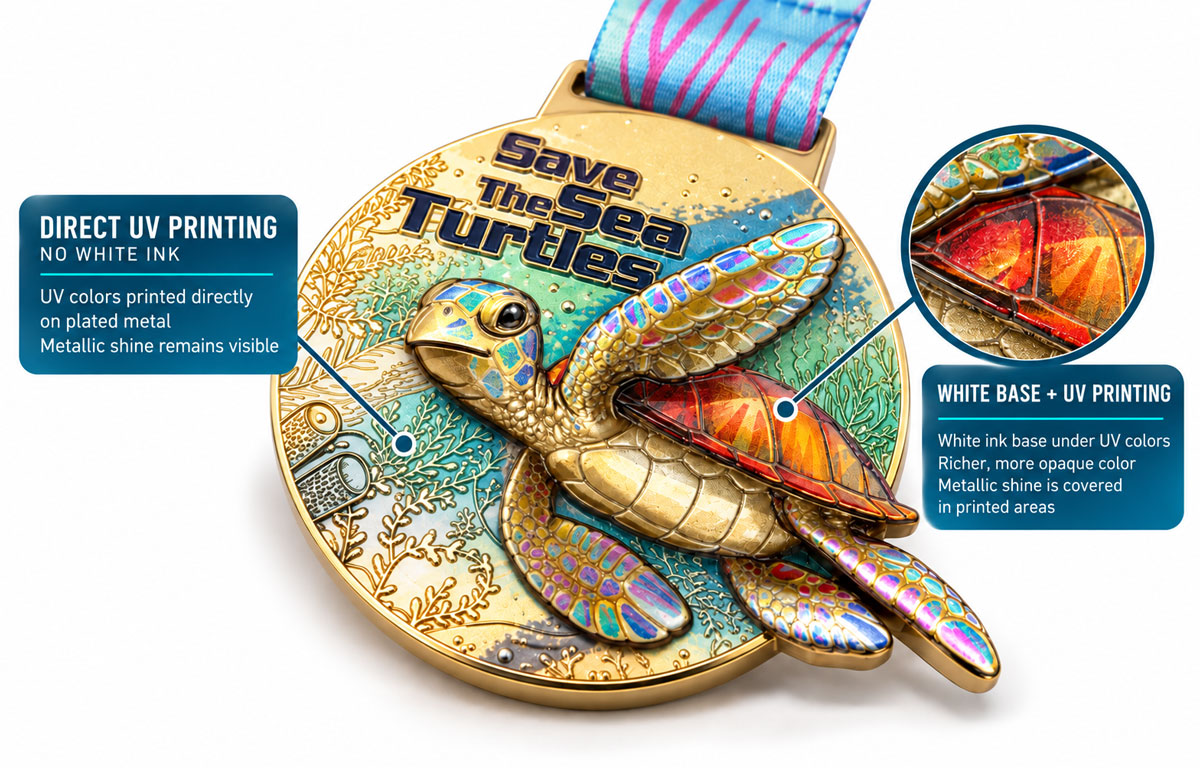
A white ink base can be printed beneath UV colors for a more opaque and vivid appearance. Without the white base, the underlying plated metal can remain visible through the printed color, creating a metallic effect.
Note: Without a white ink base, UV color is still printed over the metal. This differs from exposed metal, where selected areas are left completely unprinted.
Design Tip
Use a white ink base for stronger color opacity and more vivid colors. Omit it selectively where the plated metal is intended to remain visible through the printed artwork.
UV Printing on 3D Sculpted Surfaces
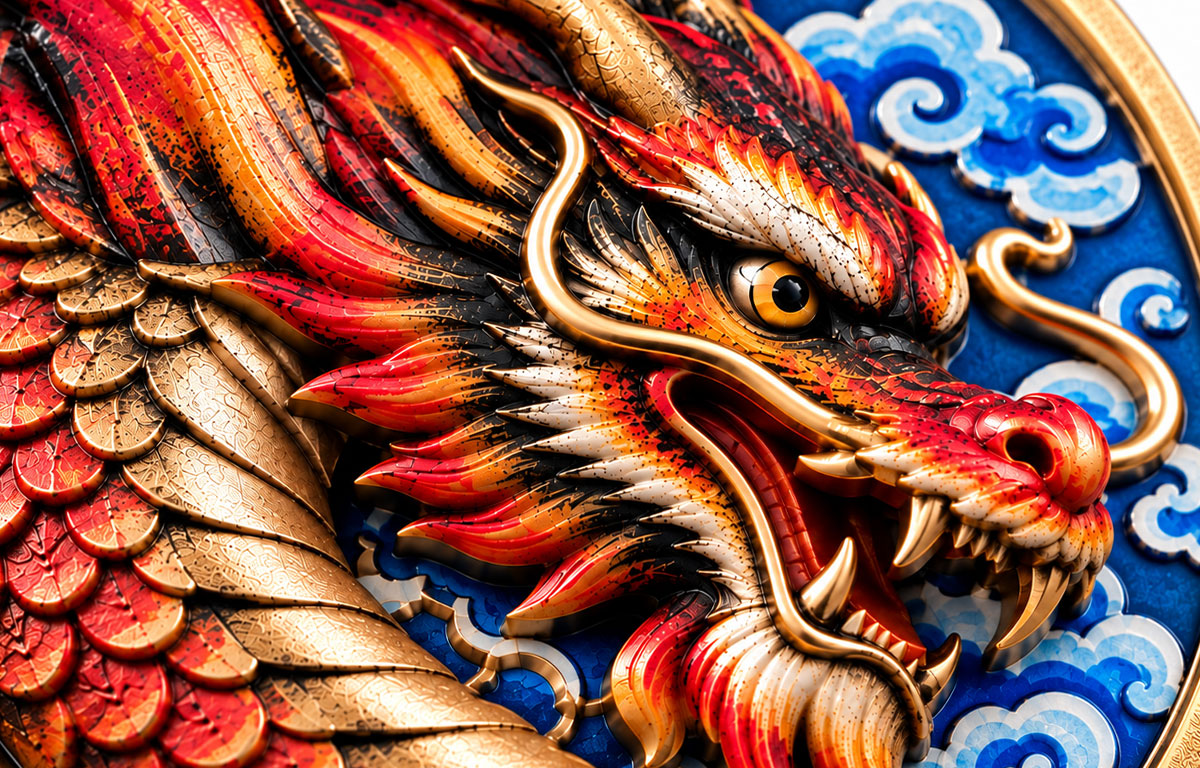
Printing Across Contoured Relief
Printed colors and fine details can follow suitable gently contoured 3D surfaces while retaining the sculpted form underneath.
Design Tip
Use UV printing on broader, gently contoured areas. Very steep transitions or highly irregular surfaces may require artwork adjustment.
UV Printing or Enamel for 3D Challenge Coins?
UV printing and enamel can both add color to 3D challenge coins, but they suit different types of artwork.
UV printing is better suited to gradients, fine textures and complex multicolor graphics, while traditional enamel is better for solid color areas and more precise PMS color matching. The two processes can also be combined when a design requires both effects.
| Design Consideration | UV Printing | Traditional Enamel |
|---|---|---|
| Color Process | CMYK digital printing | Individually filled enamel colors |
| Gradients | Yes | No |
| PMS Color Matching | Approximate | More precise |
| Fine Details & Textures | Excellent for intricate graphics and textures | Requires manufacturable color areas |
| Metal Dividers | Not required between every color transition | Generally required between enamel colors |
| 3D Integration | Suitable for selected raised, recessed and gently contoured surfaces | Best suited to defined areas suitable for enamel filling |
| Best For | Gradients, textures and complex multicolor artwork | Solid PMS colors and traditional enamel designs |
SPECIFICATIONS
- Material: Zinc Alloy
- MOQ: 100 pcs per Design
- Overall Thickness: Approx. 1.5–10 mm
- 3D Structure: Double-Sided or Multi-Sided Molding
- Color Process: Full-Color CMYK UV Printing
- Printing Surfaces: Flat or Suitable 3D Contoured Areas
- Metal Finishes: Gold, Silver, Black Nickel, Copper & Antique Finishes
Notes:
- Overall thickness and relief depth depend on the design and structure.
- UV printing can be selectively applied while leaving plated metal exposed.
- For important text and fine lines, we recommend a minimum line width of 0.25 mm and high-resolution printing for better detail reproduction.
Still planning your custom UV printed 3D challenge coin? These FAQs cover practical questions about artwork preparation, sampling, color approval and production before placing an order.
Do I need to provide a finished 3D model?
No. You can send us your 2D artwork, logo, sketches or design references. If you already have a 3D file, you are also welcome to provide it for our review.
How is the sample approved before mass production?
A pre-production sample is normally made before bulk production. You can approve the sample through photos and videos, or request the physical sample to be sent for inspection before mass production.
Will UV printed colors exactly match PMS colors?
No. UV printing uses a CMYK-based process, so PMS colors can only be reproduced approximately.
The underlying plating may also affect the printed appearance.
Where stronger opacity is required, a white ink base may be used, while some designs intentionally omit it to retain the metallic effect. For color-critical projects, approval of the actual sample is recommended before mass production.
Can UV printing cover every part of a deep 3D relief?
Not always. Very steep slopes, deep recesses or abrupt height changes may not be suitable for consistent UV printing. For these areas, the artwork may need to be adjusted, left as exposed metal, or handled with another color process.
How should fine text or small details be designed for UV printing?
For important text and fine lines, we recommend a minimum line width of 0.25 mm. Very small details should also be positioned on suitable printing surfaces rather than across steep relief transitions.
Can a design combine UV printing, enamel and exposed metal?
Yes. These finishes can be combined within the same coin when the design allows. For example, enamel may be used for solid PMS colors, UV printing for gradients or fine graphics, and selected areas can remain unprinted to show the plated metal.
What happens if my artwork has too much detail for the available coin size?
Some details may need to be simplified, enlarged or redistributed between the 3D relief and UV-printed areas. This is especially important for small text, thin lines and highly detailed sculpted features, where the physical coin size limits how much detail can be reproduced clearly.



 JIN SHEU
 JIN SHEU